
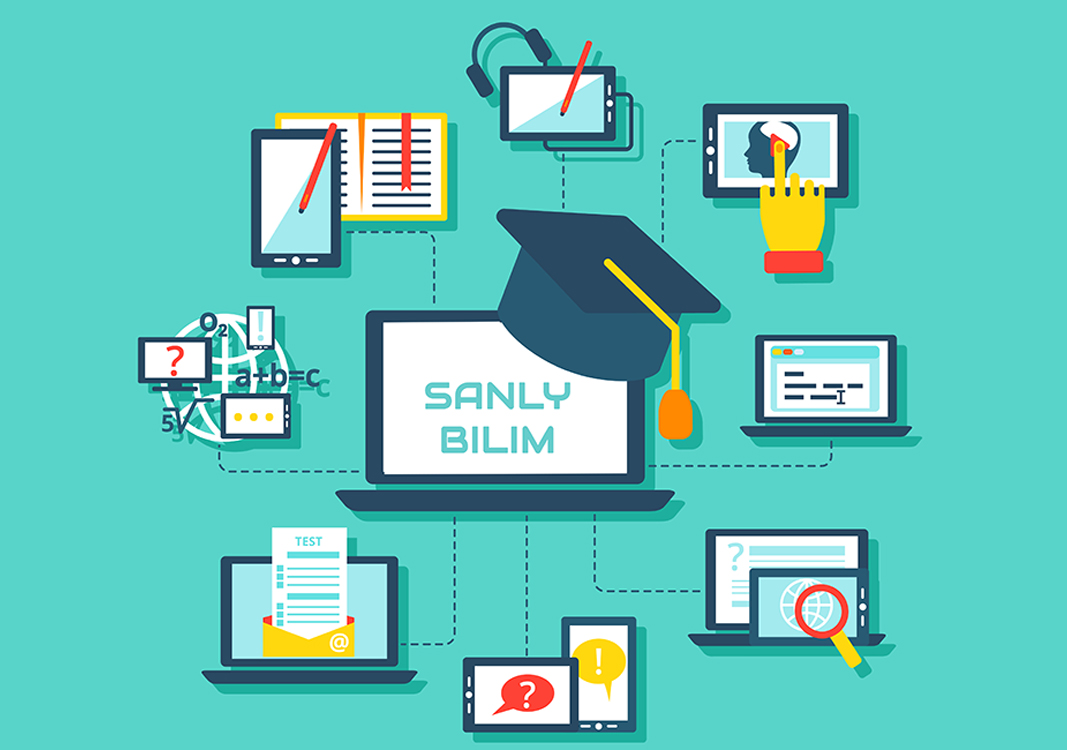
Digital education
Implementing innovative technologies of teaching in higher and secondary vocational education is one of the important tasks of the modern student - to prepare young professionals to work in a digital economy.
The digital economy is a system of economic, social and cultural relations based on the use of digital technologies, which is carried out with the help of digital and telecommunications. The concept of digital economy is related to the terms "e-economy", "internet-economy", and "web-economy".
The system of economic relations, which is based on the use of digital information and communication technologies, allows to save time and money, and to discover new sources of income. In the digital environment, the ability to quickly access goods and services to global markets and make them available to consumers anywhere in the world is increasing. Thus, the digital economy is more effective in terms of speed, high quality and convenience.
The digital economy includes the following components - infrastructure, e-business and e-commerce - the sale of goods online - direct communication.
The digital economy is an important factor in the production of digital information. It is distinguished by the fact that it has a significant improvement in efficiency, quality and productivity in various forms of production, technology, structures, storage, sale, delivery and use of goods, services, compared to the traditional view of economic management.
The key to the successful operation of the digital economy is the reliable operation of digital information technologies. Therefore, today’s students, who are young professionals who will work in the digital economy in the future, must be well-versed in information security, that is, able to protect information from the influence of a third party.
Information security means protection from external influences that could harm the subjects of the data relationship, including the owners and users of the data. Such effects can come in a variety of forms: accidental or intentional, natural or artificial. The transition of economic activity to a digital system requires an increase in its security.
It is important that the education of young people working in the digital economy is in line with the practical experience of higher education in order to have a deep and stable knowledge in this regard. As in other secondary vocational and higher education institutions, students are being taught the Digital Economy course as a new course with the start of the 2020-2021 academic year. The main purpose of the course is to teach students how to master digital technologies in production and practice in the future as a young professional.
Taking advantage of the unprecedented efforts of our esteemed President to take advantage of the opportunities to be educated, young people who learn a profession will become skilled professionals in education, in their chosen professions, and will fully fulfill their hopes and aspirations. May the life of our dear Arkadag, the wise, long-lived and wise, who always cares for the education and learning of specialists who are educated, educated and advanced in the modern technologies for the further development of our Motherland, always prosper!